Heat Pump Installation Cost in Cincinnati, Ohio

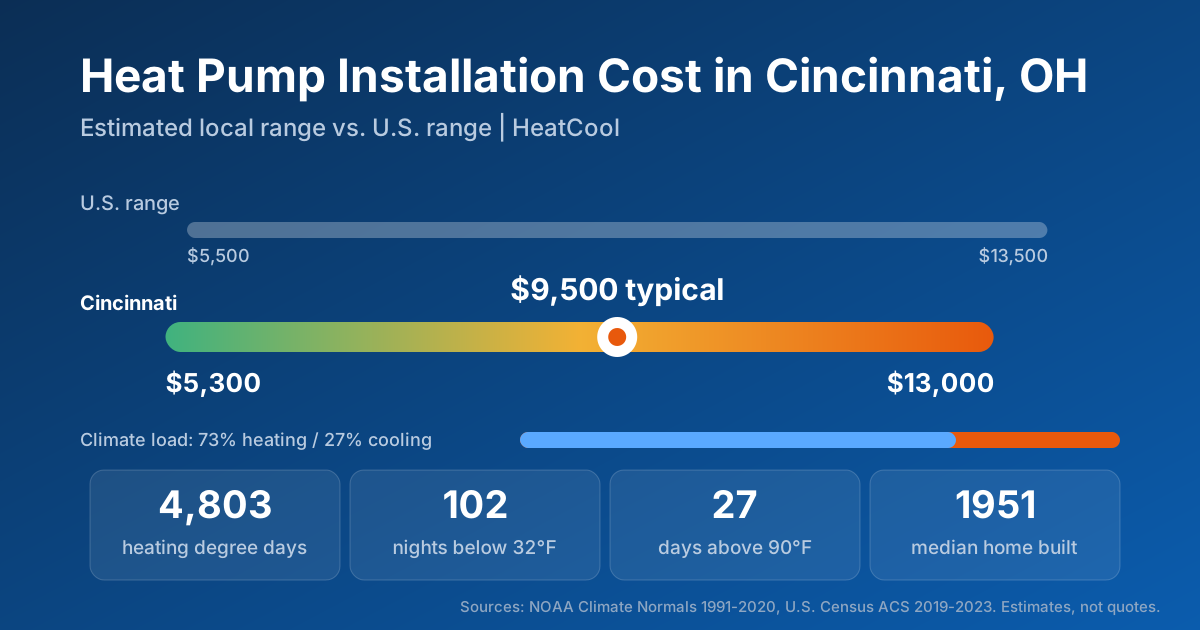
Heat pump installation in Cincinnati runs about $9,500 for a typical job. Basic installs start near $5,300. High-efficiency equipment with duct or electrical work can reach $13,000.
Compare Free Quotes in Cincinnati
Cincinnati Weather and HVAC Load
Cincinnati logs 4,803 heating degree days and 1,125 cooling degree days in a normal year, based on the closest NOAA weather station. Heating is the bigger job here, and furnaces and heat pumps in Cincinnati put in far more hours than the air conditioner. Count on roughly 102 nights below 32°F and 27 afternoons past 90°F in a typical year. Snowfall averages about 16 inches. For a 2,000 sq ft house, this climate points to a heating load somewhere near 55,000 BTU/h. Treat that as a starting number. A Manual J calculation will move it up or down based on insulation and windows.
| Heating degree days / year | 4,803 |
|---|---|
| Cooling degree days / year | 1,125 |
| Nights at or below 32°F | 102 |
| Days above 90°F | 27 |
| Average low / high | 44.2°F / 65.4°F |
Cincinnati Housing Stock
Census figures put the median build year in Cincinnati at 1951, so a typical house here has about 75 years on it. Houses that old often still have duct runs sized for an old coal or oil furnace and 60- or 100-amp electrical panels. Both can add cost when new equipment goes in. Cincinnati has roughly 56,000 owner-occupied homes, or 38.9% of households. The median home value is $215,300, and median household income is $51,707. We use both figures to adjust labor and pricing for this page.
NOAA storm reports for Hamilton County show 10 hail days and 41 days with damaging thunderstorm winds over the six years from 2020 to 2025. The largest hail reported was 1.5 inches across. Hail flattens the thin aluminum fins on condenser coils and cuts airflow. After a big storm, take a look at the outdoor unit; homeowners insurance often covers the damage.
When It Makes Sense
- Energy bills are higher than you want them to be
- There's no natural gas service on your street
- The house heats with electric baseboard, oil or propane
What Moves the Price
- Variable-speed (inverter) or single-stage compressor
- Electrical panel capacity and wiring
- A ducted system or a ductless mini-split
- Backup heat, either electric strips or a gas furnace (dual-fuel)
- Size in tons, and whether the unit is cold-climate rated
For Cincinnati we lowered the national figures about 4%, based on local income, home values and climate-based equipment sizing. Get at least three written quotes; real bids can land outside this range.
What the Quote Should Cover
- Line set, drain and electrical hookups
- Thermostat setup and backup heat settings
- The outdoor heat pump and an indoor air handler or coil
- A load calculation and equipment selection
- Commissioning and warranty registration
Ohio Permits, Efficiency Rules and Rebates
Ohio falls in the DOE's North region. New split central air conditioners must meet at least 13.4 SEER2, and heat pumps sold anywhere in the U.S. need 14.3 SEER2 and 7.5 HSPF2. Equipment replacements in Cincinnati generally need a mechanical permit, and a reputable contractor will pull it for you. Ask for their Ohio license or registration number and a certificate of insurance with the quote. The federal 25C tax credit ended for equipment installed after December 31, 2025, so incentives now come mostly from utilities and state programs. Check your electric and gas utility's rebate page before you pick equipment.
Before You Hire
- Where winters get cold, ask for a model on the NEEP cold-climate list.
- Ask your electric utility and state energy office what heat pump rebates are open right now.
- A dual-fuel setup keeps your gas furnace as backup for the coldest nights.
Get Free Heat Pump Installation Quotes in Cincinnati
Tell us where you are and up to three licensed local pros will get in touch. You don't have to hire any of them.
Heat Pump Installation Questions from Cincinnati Homeowners
How much is heat pump installation in Cincinnati?
Plan on $5,300 to $13,000, with most jobs near $9,500. Equipment efficiency, house size and the condition of the ducts and wiring decide where your quote falls.
When is the best time to schedule heat pump installation in Cincinnati?
Between late spring and early fall. Cincinnati averages 102 freezing nights a year, and heating calls spike from November through February.
How long does a heat pump last?
Usually 12 to 15 years. A heat pump runs year-round, so it needs maintenance twice a year rather than once.
Do heat pumps work in cold weather?
Yes. Cold-climate heat pumps keep making heat well below 0°F. They lose efficiency as it gets colder, so many homes in cold regions keep backup heat.
Heat Pump Installation Near Cincinnati
Sources: U.S. Census Bureau ACS 5-year estimates 2019-2023 and 2024 population estimates; NOAA NCEI U.S. Climate Normals 1991-2020, station Cincinnati Lunken Airport; NOAA Storm Events Database 2020-2025, Hamilton County. Prices are our estimates, not contractor quotes. Updated 2026.