Furnace Repair in Washington, District of Columbia

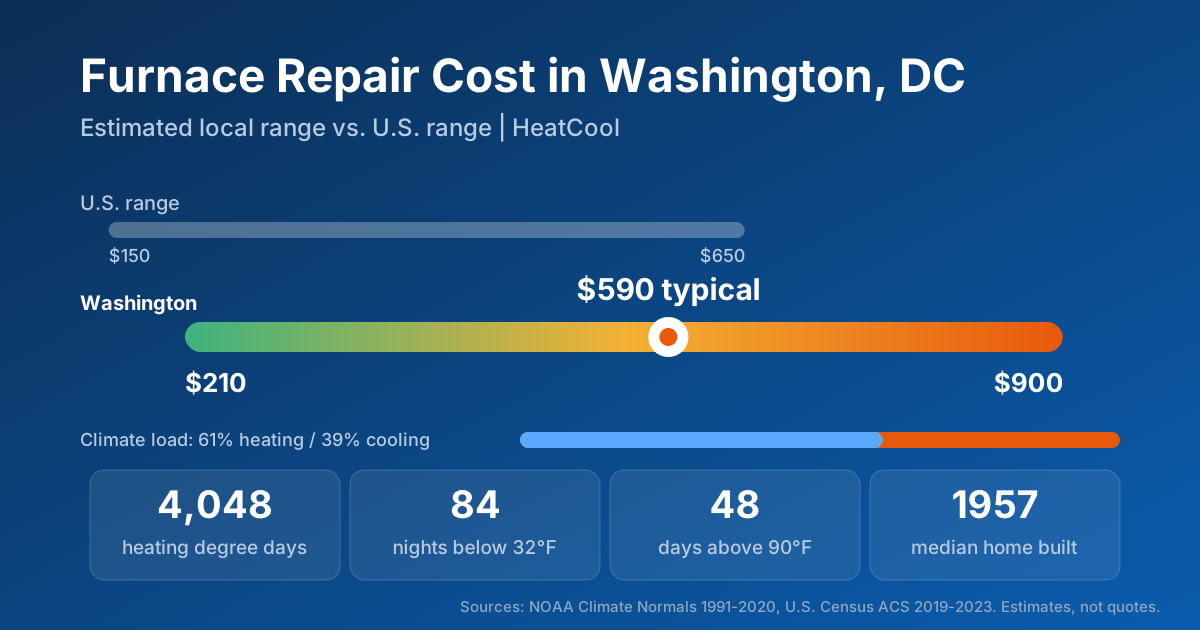
Furnace repair in Washington starts near $210 for a simple fix and can reach $900 for after-hours calls or major parts. A typical bill is closer to $590.
Compare Free Quotes in Washington
Washington Weather and HVAC Load
In a normal year, Washington racks up 4,048 heating and 1,648 cooling degree days (NOAA 1991-2020 normals). Heating is the bigger job here, and furnaces and heat pumps in Washington put in far more hours than the air conditioner. Count on roughly 84 nights below 32°F and 48 afternoons past 90°F in a typical year. Snowfall averages about 10 inches. For a 2,000 sq ft house, this climate points to a heating load somewhere near 50,000 BTU/h. Treat that as a starting number. A Manual J calculation will move it up or down based on insulation and windows.
| Heating degree days / year | 4,048 |
|---|---|
| Cooling degree days / year | 1,648 |
| Nights at or below 32°F | 84 |
| Days above 90°F | 48 |
| Average low / high | 48.6°F / 68°F |
Washington Housing Stock
The median Washington home dates to 1957, according to the Census ACS. That makes the typical house about 69 years old. Houses that old often still have duct runs sized for an old coal or oil furnace and 60- or 100-amp electrical panels. Both can add cost when new equipment goes in. Owners live in 41.1% of occupied homes, roughly 132,000 households. With a median household income of $106,287 and a median home value of $724,600, local labor rates come out above the national middle in our model.
District of Columbia had 1 hail day and 44 days with damaging thunderstorm winds from 2020 through 2025, according to NOAA storm records. The largest hail reported was 1 inches across. Storms here are more likely to cause power surges than coil damage, so a surge protector on the outdoor unit is worth the small cost.
Symptoms Worth a Service Call
- A yellow or flickering flame instead of a steady blue one
- The burners light, then shut off a few seconds later
- Cold air coming out of the vents
- The thermostat calls for heat and nothing happens
- The blower won't stop running
What Moves the Price
- The furnace's age and brand, which affect parts availability
- The diagnostic or service call fee
- Whether the part is still under the manufacturer warranty
- Night, weekend or holiday rates
- Which part failed: a flame sensor costs far less than a control board or blower motor
We raised the national figures about 39% for Washington using local income, home values and the equipment size this climate needs. Real bids can still come in outside the range, so collect three written quotes.
What the Quote Should Cover
- A test run through a full heating cycle
- Replacing the part that failed
- A diagnostic check
- A safety and combustion check
District of Columbia Licensing and Efficiency Rules
District of Columbia is in the DOE's Southeast region, where new split central air conditioners need at least 14.3 SEER2 (13.8 SEER2 for systems of 45,000 BTU/h and up). A repair usually goes ahead without a permit, but the tech handling refrigerant must hold EPA 608 certification. Ask the company for its District of Columbia license or registration number before the visit.
Before You Hire
- Ask whether the diagnostic fee comes off the repair bill.
- Have the model and serial number from the furnace label handy. Parts get ordered faster.
- Check the filter, the thermostat batteries and the breaker first. Those three cause a surprising number of no-heat calls.
Get Free Furnace Repair Quotes in Washington
Tell us where you are and up to three licensed local pros will get in touch. You don't have to hire any of them.
Furnace Repair Questions from Washington Homeowners
What does furnace repair cost in Washington?
Most bills land between $210 and $900, including the service call. A typical visit is about $590. Night and weekend calls cost more.
Should I repair or replace my furnace?
Here's a rule many techs use: multiply the furnace's age by the repair quote. If the number is over $5,000, replacing it usually makes more sense.
What is the most common furnace repair?
Cleaning a dirty flame sensor or replacing a cracked hot-surface ignitor. They're also two of the cheapest repairs.
Sources: U.S. Census Bureau ACS 5-year estimates 2019-2023 and 2024 population estimates; NOAA NCEI U.S. Climate Normals 1991-2020, station Natl Arboretum DC; NOAA Storm Events Database 2020-2025, District of Columbia. Prices are our estimates, not contractor quotes. Updated 2026.